
Why Great Coaches Still Have to Chase Clients
Aug 19, 2026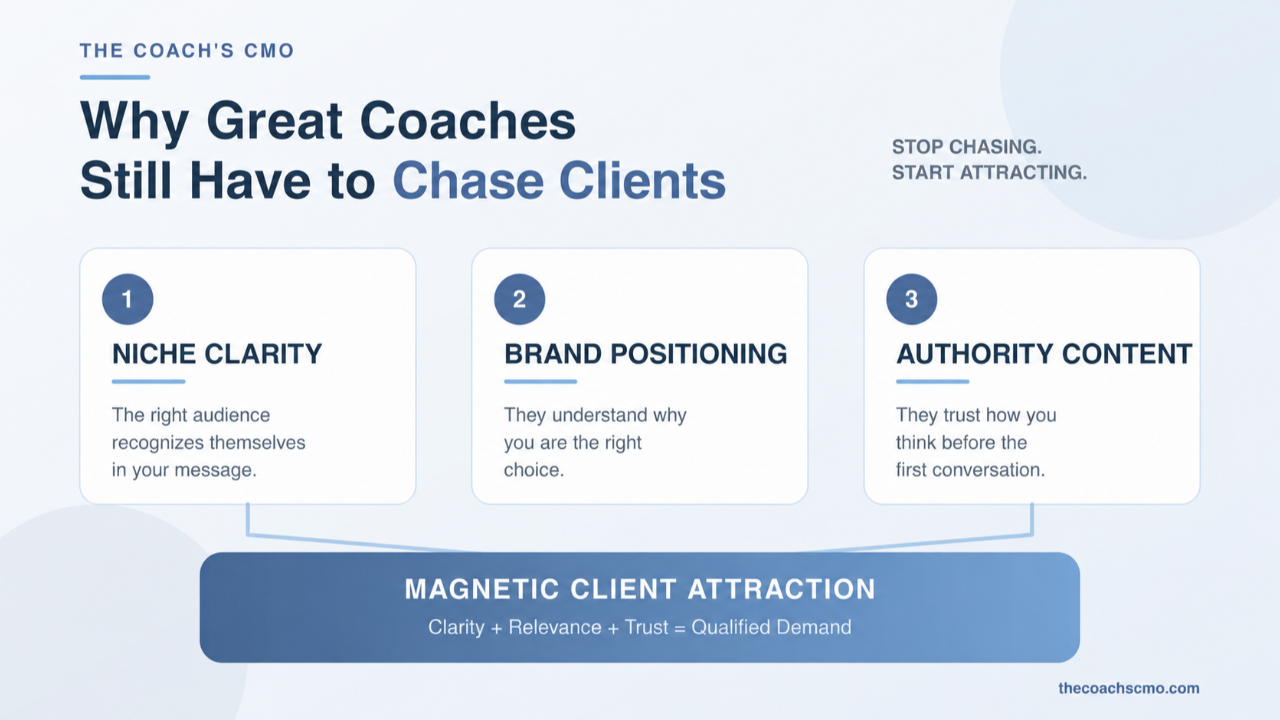
Three systems help the right prospects understand your value before the first call.
There is a disheartening disconnect in the coaching industry.
Coaches with years of experience and an exceptional record of results have to reach out to almost every new lead, every new sales opportunity.
They are spending time on LinkedIn sending connection requests, writing messages, following up, asking for referrals, and then doing it all over again when the flow slows down.
That does not suggest that the coach’s skills are somehow lacking… it suggests that the coach has not leveraged their accumulated expertise to make their services desirable.
Prospecting should not be the sole responsibility of the coach.
If every opportunity disappears when the coach stops creating momentum by initiating contact, the coach has created a habit, not a system.
Building a consistent pipeline of coaching clients requires three integrated elements.
-
Niche Clarity
-
Brand Positioning
-
Authority Content
These three components work together to form what I call a “Client Attraction System.”
Niche Clarity
You cannot be the default choice in the minds of buyers if your message is intended to appeal to everyone
A niche is not a designation of executives, leaders, or business owners. It is a specific category of buyers with a particular challenge you are exceptionally qualified to address. When you have clarity about your niche, qualifying prospects becomes much easier since ideal clients will self-identify. Referral sources will know who to send your way. Your overall marketing will be much more focused and effective by targeting the challenge rather than a generalized description of who your clients are.
Brand Positioning
Your niche is who you work with. Your brand positioning is why they should work with you.
Coaches with years of experience and exceptional results often position themselves by stating their qualifications and the approach they bring to the table. In positioning statements, credibility typically manifests in certifications held, methodologies utilized, and promises kept regarding the transformation delivered to clients. However, those positioning elements are not typically differentiated enough; most coaches could say very similar things about their credentials, their methods, and their commitment to transformation.
When creating a positioning statement, focus on providing buyers with reasons they should choose you based on the value you bring to their specific situation. A strong value proposition will always tie back to benefits sought by the buyer. It should highlight what differentiates you while simultaneously addressing the challenge in a way that makes selecting you seem like an obvious choice.
Authority Content
Authority content serves to educate prospective clients on the challenge, the solution, and why working with you is the best choice. Authority content helps buyers connect with you before their first conversation.
Good authority content reveals problems the buyer may not have considered, dismantles long-held beliefs about how business works, helps quantify the cost of inaction, and offers a far more desirable alternative to the status quo. Over time, the content you create will begin to anticipate the questions prospects will ask during your discovery session.
Having worked with dozens of high-level coaches, I often see their marketing materials and hear their positioning statements. Many can deliver exceptional results to their clients but lack the positioning and content marketing expertise necessary to influence demand in the same way. Once we begin narrowing their focus on the buyer they want to impact, defining the challenge they should own, and providing them with the content marketing assets to dominate their niche, their conversations begin to change dramatically. Prospective clients stop asking, “What do you do?” and start asking, “Can you help us?”
Niche clarity creates recognition, brand positioning drives relevance, and authority content builds trust. Each component is essential in influencing demand for the services of an executive coach.
The Coach’s CMO partners with high-level coaches to build complete Client Attraction Systems that generate sustainable leads without requiring constant direct outreach:
-
Develop comprehensive strategies, positioning statements, content marketing approaches
-
Generate supporting assets necessary to drive qualified prospects into the consideration set of these coaches with compelling messaging that influences their decisions
If you find your experience and results outperforming your ability to drive demand, download The Coach’s Visibility-to-Authority Gap™, my 19-page blueprint with worksheets to build expertise-led content marketing, here.

» Download The Coach’s Visibility-to-Authority Gap™
Enjoy!

P.s. If you would rather talk through your specific needs, I invite you to schedule a complimentary Coaching Business Growth Strategy Session.